I have been dabbling in beekeeping for several years now. At least in theory. From the very beginning, one thing was very important to me: keeping these fascinating insects in a natural wy.
The most natural “keeping” would be in a hollow tree, but I do want a bit more contact. I want to combine the natural home as much as possible with modern management methods.
The Beginning of My Small Beekeeper Library
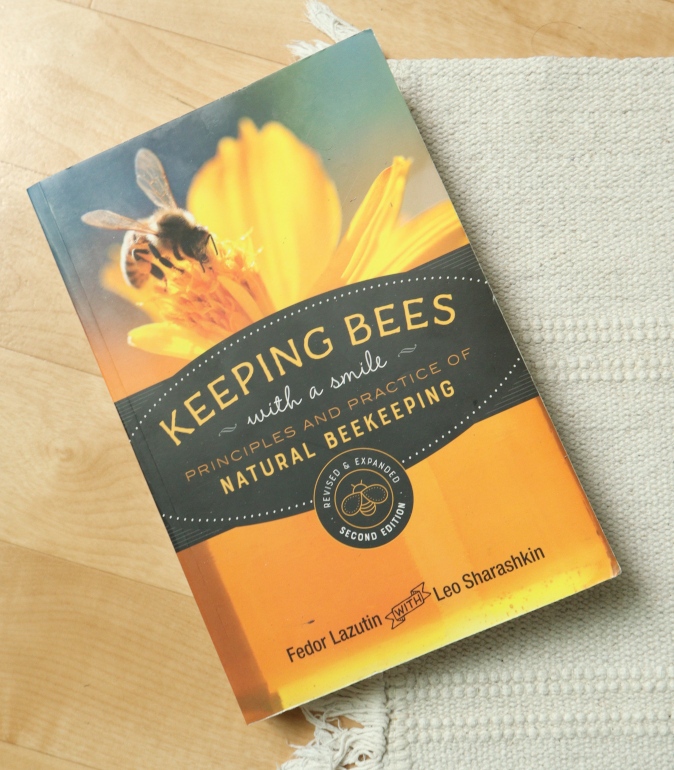
It all started with a book by Fedor Lazutin: “Keeping Bees with a Smile”. In this book, he introduces his management method using the Horizontal Hive, a Lazutin hive with extra-deep Langstroth frames. Lazutin is known for viewing beekeeping as a harmonious relationship between humans and nature, and he places great emphasis on the health and well-being of the bees. His approach to beekeeping often involves natural methods and promotes sustainable and environmentally conscious beekeeping.
This book was the perfect entry point for me because it provided a clear approach that made sense to me right from the start.
It was translated from Russian into English by Dr. Leo Sharashkin, who also shares much of his knowledge on his website HorizontalHive. He himself uses Layens frames in his hives, which are introduced in the book “Keeping Bees in Horizontal Hives,” by George de Layens and edited by Dr. Sharashkin.
In Germany, Layens hives and the corresponding frames are not widely used. However, I still wanted frames that are vertical, instead of the usual horizontal frames.
After much consideration about whether homemade frames would be a good option, I came across a german book:
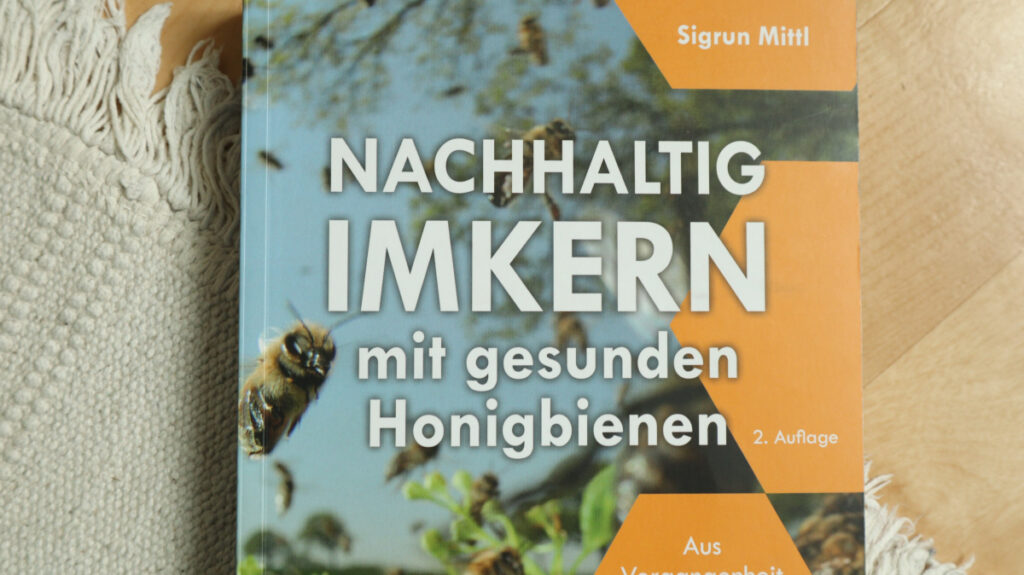
The book “Imkern mit der Einraumbeute” by Johannes Wirz and Norbert Poeplau presents a very similar system from Germany: the Mellifera horizontal hive, with vertical Dadant frames. Here, I found a frame size that matched my ideas (more info below) and that is also available in Germany.
The Right Hive
Once the question of the frame size was settled, I turned to choosing the right hive.
For my bees’ hive, I had four main points that were especially important to me, mainly influenced by “Keeping Bees with a Smile” and also the book “Honeybee Democracy” by Thomas Seeley:
1. It should be well insulated
There is much debate online about hive insulation. Some say that the 18 to 22 mm of traditional hives are sufficient, while others believe good insulation offers several advantages. I find the latter much more plausible—after all, a hollow tree generally has thicker walls than just 2 cm.
2. It should be made from natural materials, as far as possible and sensible
It is very important to me to design my environment from natural materials as much as possible. The same should apply to the beehive.
3. It should have a volume of around 50 liters
Thomas Seeley studied the behavior of bee swarms and how they choose their new homes. He found that they prefer a volume of 40 to 60 liters.
Furthermore, or perhaps because of this, a smaller hive than the conventional 120 liters or more allows for healthier bees. Bees have an instinct to fill their hive, and the larger it is, the longer this takes. If they finish earlier, there is more time and energy for other important things: cleanliness, hygiene, and yes, also reproduction via swarming, which also improves the health of the bees. But maybe I’ll talk about that another time.
4. It should provide space for frames with sufficient food for winter
The winter cluster needs honey above them to feed through during winter. They move about 1 mm per day and naturally from bottom to top. Tall frames have the advantage of more uninterrupted storage and so allow a better distribution of the winter cluster in a spherical shape, which reduces the surface area of the cluster compared to one forced to winter on shallower frames and thus has to spread out more.
My Self-made Beehive
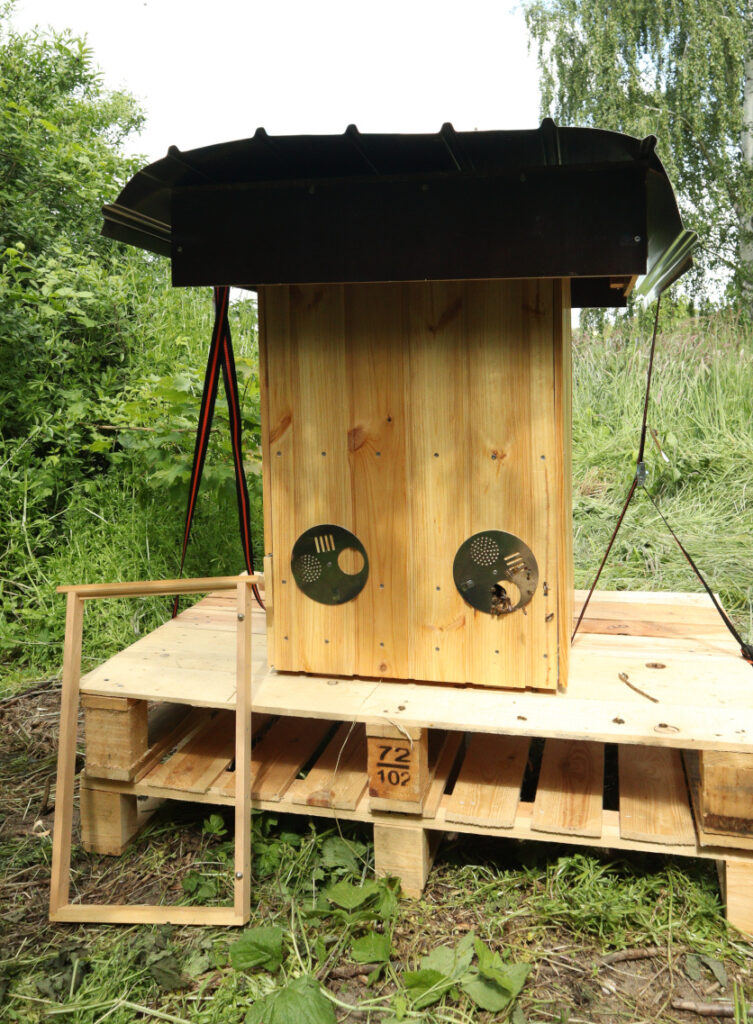
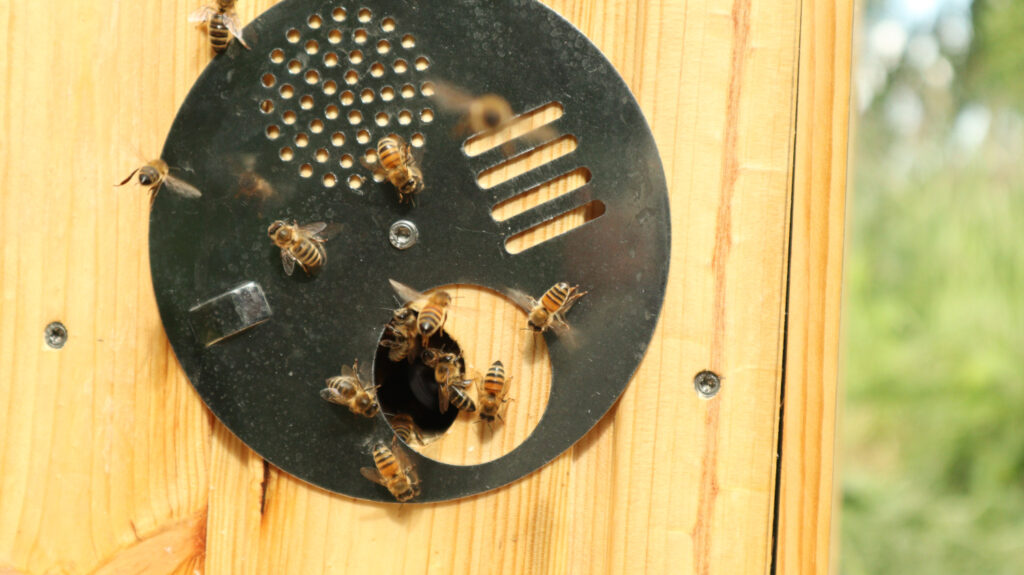
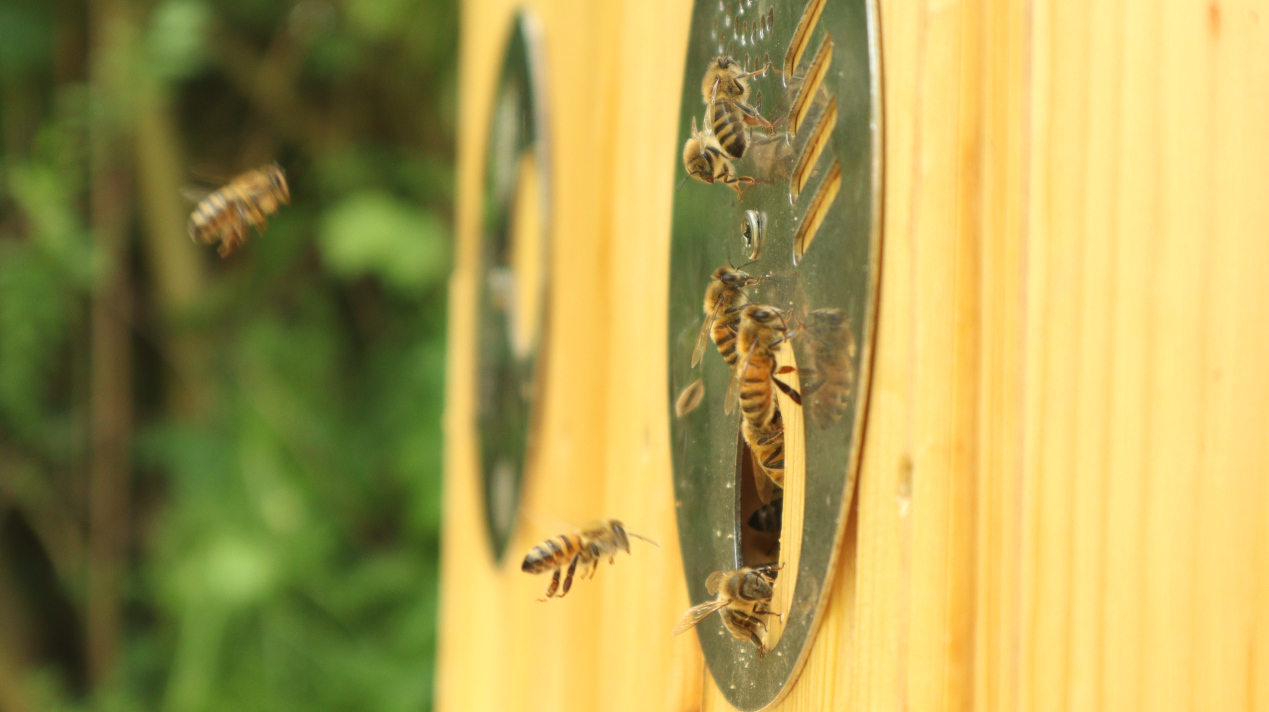
Unfortunately, I couldn’t find a suitable hive on the market that meets all my criteria, so I built one myself: mainly from wood and wool. It also includes a climate cover, and all of this is designed for 10 vertical Dadant frames. Thus the hive allows for a nice feeding path for the winter cluster without a gap between two hanging frames.
My first swarm was able to move in at the end of May, and I am very curious to see how the project “Natural Beekeeping” develops.
I have already gathered a few ideas for a second hive…
But there’s still a little time to start that project.
Until next time,