In my last post Landrace Gardening, I gave you a brief introduction to the topic of landraces. As mentioned in that post, I would like to start my own breeding project. However, as the season has already progressed, I’m trying to work with what’s already growing in the garden and postpone the bigger plans until next year or the winter varieties (post to follow).
In this post, I would like to record the start of my own landrace breeding for myself and other interested readers.
Tomatoes (Solanum lycopersicum)
I have planted the following varieties in the garden this year: Brandywine, Rondobella and Tigerella.
According to Joseph Lofthouse, a tomato landrace project can be a bit tricky. Almost all of today’s common tomatoe varieties have been bred in such a way that the petals have grown together and inclose the stigma and anthers, so that they cannot be pollinated by insects and only self-pollinate. This is a useless characteristic in landrace breeding, as it depends on crosses and mixtures.
That’s why I took a closer look at my tomato flowers:
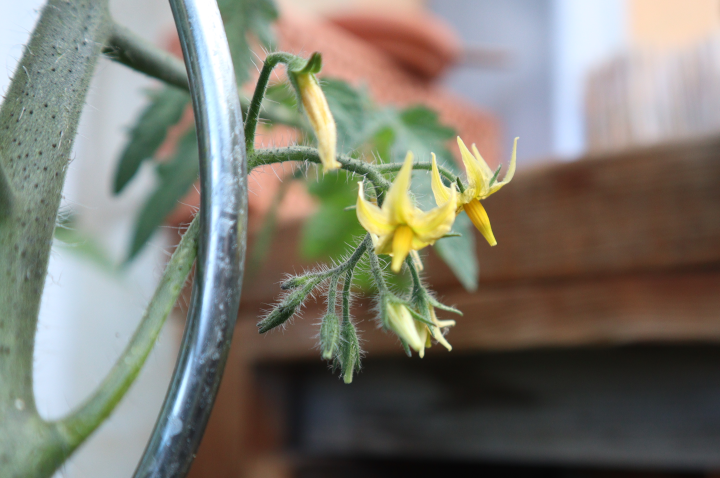
The little cherry tomato Goldiana, which I also have on the balcony, has exactly this characteristic. The petals are closed so that neither the stigma nor the anthers can be seen from the outside. This is wonderful for preserving the variety, as it can be assumed with a high degree of certainty that it will self-pollinate and therefore the seeds will have the same characteristics as the parent plant. Unfortunately, this is not so advantageous for the landrace breeding project, as no crossing occurs.
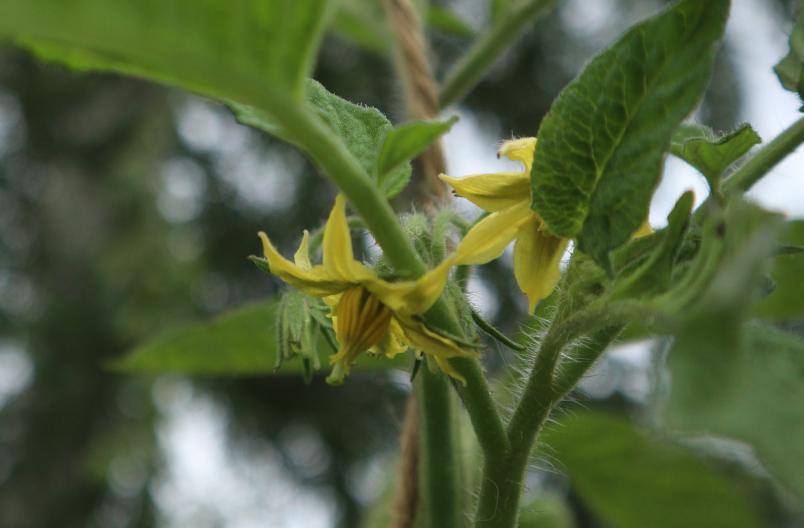
The Brandywine tomato has a slightly different flower structure. The stigma sticks out and the petals are not completely fused. This may lead to some cross-breeding. As it is the only variety in the garden where crossing may take place, I won’t be able to harvest any particularly diverse seeds this year. Next year, however, I want to grow more diverse varieties of beef tomatoes, which are supposed to be more open-flowered and thus could cross-pollinate.
Cucurbita (Cucurbita moschata and Cucurbita maxima)
I would like to start my pumpkin landraces with the C. maxima and C. moschata. I’m currently still a little cautious with the C. pepo, as they also include zucchinis and poisonous ornamental pumpkins, which seems a little more work for the beginning and the first attempts.
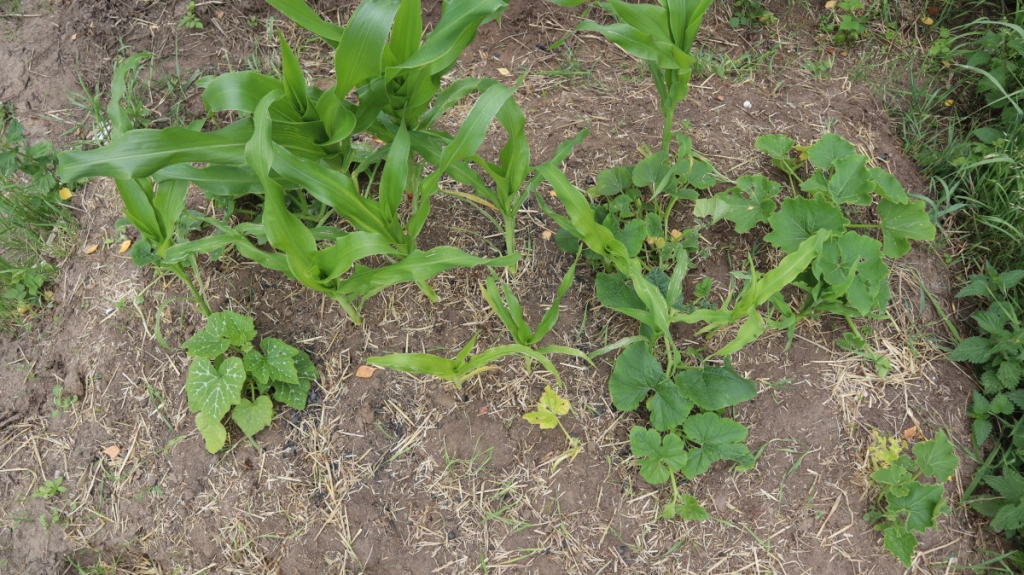
I currently only have one variety each growing in my garden (Muscat de Provence and Blue Kuri). But after having decided to start my landrace project, I sowed some more of these and added two old seeds of Uchiki Kuri, also a Hokkaido pumpkin, which I had bought years ago. The plants already growing in the garden have suffered badly from the slugs, so there’s no harm in sowing more and leaving them to the natural selection of the environment. If I can harvest seeds from them this year, it will only be a small start to my pumpkin landrace project, but one that may give me some plants that are better adapted to my garden for next year. For the coming year, I definitely want to add more varieties to increase the genetic diversity and crossing possibilities. I will certainly also take seeds from one or two pumpkins from other gardens, as I have somewhat lost my fear of cross-breeding and these can certainly pass on good genes to future generations.
Corn
The situation with the corn is similar to that of the pumpkins: I have only one variety growing in the garden this year (Tramut), but I would like to use the best plants as a small head start for my actual corn landrace. I’m not quite sure how to go about it yet, though, as I want to taste the harvest and collect seeds at the same time. Is it possible to simply cut the cobs on the plant, eat one half and leave the other to ripen on the plant? Or can you also make dried sweetcorn seeds edible again by cooking them? Perhaps you know more about this than I do…?
So far, I have been able to successfully preserve sweetcorn by briefly boiling and then drying it, but I hadn’t yet thought about seed production back then…
Just for fun, I also planted a few popcorn seeds, much later than the sweetcorn. Maybe working with different flowering windows can help me grow both a sweetcorn and a popcorn landrace variety, preventing them from cross polinating.
Next year, I definitely want to throw a variegated corn variety into the mix to increase genetic diversity.
Potatoes
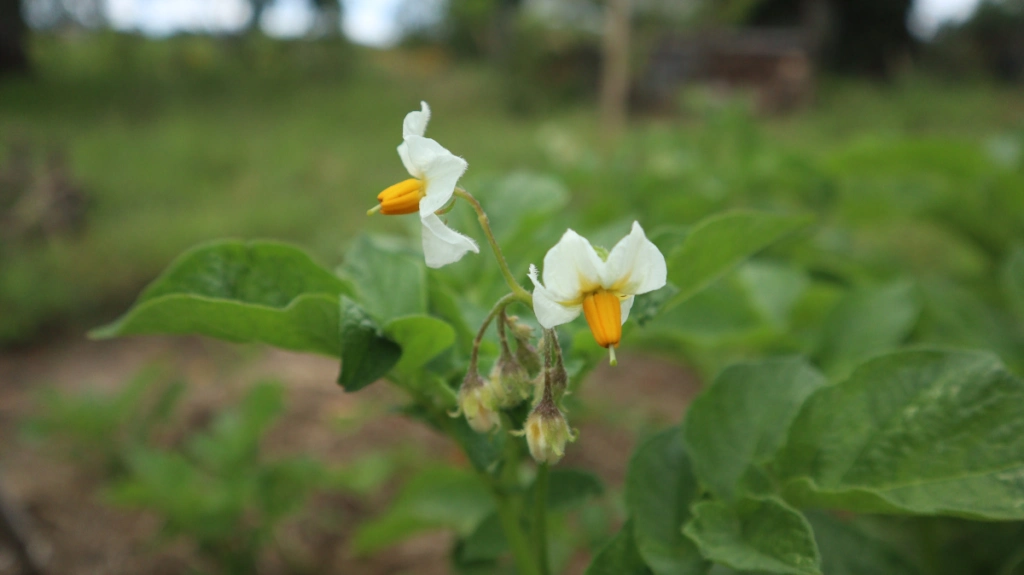
I would like to try growing potatoes from true seed next year. My potato plants are already flowering, so I’m very curious to see whether they will actually produce fruit and seeds.
I am growing two varieties this year (Red Laura and one that I have forgotten the name of). These could cross-pollinate with each other and pollen from my neighbor’s potatoes might also reach my potato plants.
I’m very excited about next year, as I’ve never sown true potato seeds before.
Things so far….
For the fall, winter and spring, my main goal is to start breeding spinach and leek landraces. I still have a few spinach seeds and have ordered four other varieties to sow on a larger scale. According to the current plan, I will have quite a lot of space available for cultivation in the fall, so that I can sow the five varieties together and have numerous plants to select from or be selected on by my growing conditions.
I currently have two different varieties of leek growing in the garden. Over the next few months, I want to identify the best plants and leave them over the winter. If they survive, they will definitely have earned a place in my landrace, will be allowed to flower next year and hopefully produce plenty of crosspolinated seeds.
I have lots of plans and I can already feel my enthusiasm and anticipation for landrace gardening growing. Many of these plans will probably not work out quite as I imagine, but hopefully I can learn something from them and take the plants that can best accompany me on my journey into the next generations.
I realize how frustrating the setbacks were, when my first little squash plants were eaten by slugs or my beans didn’t even germinate. I now try to see natural selection not as a setback, but as progress and a gain towards healthier, more resistant plants that have won their place in my landraces. Ideally, every setback at the beginning brings greater progress.
Until next time,