When thinking about seed saving most gardeners will probably mainly have variety maintanance and preservation in mind. I did too until recently. In this post, however, I would like to share a slightly different idea with you that I stumbled across a few days ago and caught my attention. Today it’s all about landraces.
I haven’t had any first-hand experience with landrace gardening, but I’ve done a lot of research on the topic and would definitely like to incorporate the concept into my gardening practice, breed my own landraces and share the process with you.
What are Landraces?
Landraces are varieties that have a high degree of diversity, are variously pollinated and are adapted to your local conditions. They combine the good qualities of various highly bred varieties, that suffer from inbreeding depression, to produce resistant, high-yielding plants that are adapted to your preferences and garden. With landraces you don’t need to adapt the environment to your plants, you adapt the plants to your environment.
Landraces are created by saving your own seeds, an letting plants cross, allowing natural selection by your location, choosing your preferred traits and sharing your seeds.
Landraces are not a new invention. This way of gardening is a reflection of the classic way our ancestors gardened hundreds, thousands of years ago. Seeds were sown and the seeds of the best, largest, tastiest and most resistant plants were saved for the following year and then sown again. Over the years, this resulted in plants that were perfectly adapted to local environments, soil conditions, climatic factors and pests. Seeds were exchanged with neighbors, where very similar conditions prevailed, bringing new variations into the gene pool. Over the years, these old landraces developed into the open polinated varieties we know today.
With the beginning of the commercialization of seeds, the tradition and knowledge of producing one’s own seeds was slowly lost. However, gardeners such as Joseph Lofthouse, are slowly reviving the tradition of breeding landraces and encouraging mind shift.
The Problem with Commercial Seeds
One small paragraph will not be enough to adequately describe the problem of commercial varieties, but I will do my best to keep it short.
Today’s common vegetable varieties are mainly bred to be sold in big store far away from the actual farm. This means that they need to achieve high yields, all ripen at the same time, survive long transportation routes and have a long shelf life so that they can still be sold even after long distances between farm and market. Taste and nutrient density are of secondary importance. These varieties are bred under optimal and highly controlled conditions, so that the home gardener can only achieve yields with these varieties with a great deal of work, care and usually with the use of herbicides and pesticides. In addition, many seeds are F1 hybrids or even patented, which prevents home growers from obtaining their own seed to regrow the same variety and are now forced to purchase it from large corporations year after year.
This means that gardeners and farmers are dependent on these large seed producers and their products.
The Problem with Open Pollinated/Heirloom Varieties
Open pollinated varieties, including the heirlooms, are the result of breedings, in which plants with the same certain characteristics are crossed with each other in order to ultimately consolidate them in such a way that two plants of a variety can be crossed and the offspring have the same characteristics as their parents and grandparents. You can obtain your own seeds from open-pollinated varieties, sometimes with a little bit of hand pollination, and plant them year after year without having to buy them again and again. They allow independence from the market and can be passed on and exchanged between gardeners. However, problems still occur time and again.
In principle, there is nothing wrong with open-pollinated varieties, but it should be noted that they have been developed in certain places, under certain climatic conditions, soil conditions and pests, having adapted well to this environment. However, conditions can vary greatly, even in small areas, not to mention across countries or on completely different continents. Varieties that flourish in Italy will have a hard time in Germany and even those that grow wonderfully in Brandenburg can reach their limits in Lower Saxony. The reason for this is inbreeding depression. Certain plants have been crossed over generations and so have their offspring. They have been selected for certain traits, as a result of which other genes have been lost and with them their adaptability and resilience. Most tomato varieties now need to be well cared for, protected from rain and heavily fertilized in order to produce a good harvest. They prefer warmth and regular watering, oh, but please not on the leaves.
Landraces as the Solution?
When I recently heard about breeding landraces for the first time, in which all possible varieties are thrown together to mix the genes, I was initially taken aback. Throw away all the work that went into preserving the varieties? Just like that?
But the deeper I delved into the subject, the more convinced I became. It just made sense!
Why should people use varieties that can’t thrive where they are supposed to grow, because they simply lack the genetic information to deal with site-specific problems? It would make much more sense to adapt the plants to the location and to my wishes than to adapt the location to the plants. A high diversity of genes can also cope with a greater diversity of problems or even flourish despite of them. Well-adapted plants are not destroyed by the first pest that looks at them the wrong way, or have to be watered every day to survive a period of drought.
Especially in times of climate change, varieties that suffer from severe inbreeding depression (loss of numerous genes) are very susceptible and do not allow climate-resilient gardening. We need to recombine the genes, that we have not yet lost, in order to grow plants that are strong enough to thrive in today’s and tomorrow’s conditions to secure a regional vegetable supply, long term.
How to Breed Your Own Landraces
What you will need:
Plants, that cross pollinate and produce seeds
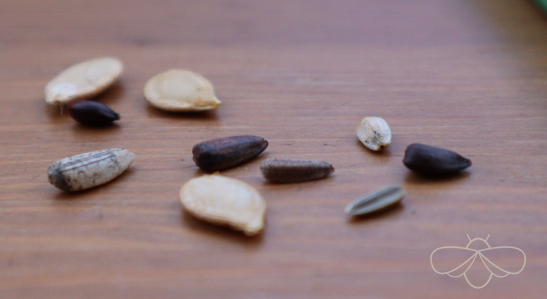
In order to increase the genetic diversity of our landraces, we need plants that can cross-pollinate and produce seeds. Today’s varieties are often no longer able to reproduce through cross-pollination. This means that they are either self-pollinated or simply clones. Many tomato varieties, for example, are bred in such a way that pollinators cannot even reach the pollen and stigma to pollinate them with foreign pollen. Garlic, too, rarely forms blossoms that could produce seeds and is only propagated vegetatively nowadays, which means that the offspring are genetically identical to the parent plant. Many beans are almost exclusively self-pollinating and potatoes also tend to be propagated vegetatively, i.e. by clones. This means that it is not possible to select for adaptation to the prevailing local conditions, as the genes are not thrown together through sexual reproduction wich allows a range of characteristics to be developed in the daughter generation.
To start your own landraces, Joseph Lofthouse recommends species that are annuals and cross easily with other plants: Squashes (especially Cucurbita maxima and C. moscha), runner beans (Phaseolus coccineus), fave beans (Vicia faba), corn (Zea mays), cucumbers (Cucumis sativus), melons (Cucumis melo and Citrullus lanatus), and spinach (Spinacia oleracea). Beans are only about 30 to 35% cross-pollinated, which makes them not ideal for breeding a landrace variety, but the ease of handling, breeding and seed harvesting as well as recognizing hybrids makes them a good starting point.
The more diverse varieties, and therefore genetic diversity, you have at the beginning, the higher the probability of obtaining plants that are well adapted to your location and with which you can successfully continue breeding. But even with just a few plants at the beginning, you can start to breed your own landraces. In the following generations, you can keep adding new varieties that have a trait you favor and incorporate these genes into your landrace variety.
Willingness to experiment
In order to breed your own landrace variety, you have to lose some of your fear of crosses and hybrids. It is wonderful to have all the different pure varieties, but if we want to have plants that are better adapted to our location, we have to let go of the idea of varietal purity, even if it may be difficult at first. Successful cross-breeding can result in plants that flourish in your garden with minimal or no labor, while still producing high yields and wonderful flavors.
Of course, crossbreeding can also result in inedible yields that should not be included in the breeding of your line in order to keep the characteristics out of future generations. But perhaps it is precisely these plants that are wonderfully adapted to your environment that can be bred for taste in future generations.
A little understanding of breeding
Even though our ancestors have been breeding their vegetables in this way for thousands of years, a little understanding of the processes involved can do no harm to avoid unwanted results. There are only a few species where caution is actually required with breeding experiments. These include cucumbers, melons and above all gourds of the Cucurbita pepo species. These can contain cucurbitacins, which are bitter and can even be fatal if the dose is too high. Today, this is mainly the case with ornamental pumpkins (C. Pepo). But these can still cross-breed with zucchinis and other C. pepos and thus pass on the bitter substances. However, due to their strong bitter taste, cucurbitacins are very quickly noticed and are naturally avoided by us.
Outlook
It sounds almost too good to be true that you can have a garden with flourishing vegetables that grow by themselves and combine all your favorite characteristics. But especially under the uncertain conditions of a world in climate change, this project contains so many solutions that I think it would be risky not to try them out.
I will definitely take you with me and keep you updated on my successes and failures.
Until next time,

More Information
If you want to find out more about landrace gardening you can check out the following:
Going to Seed: https://goingtoseed.org/ Here you can find a free online course
The book: Landrace Gardening von Joseph Lofthouse