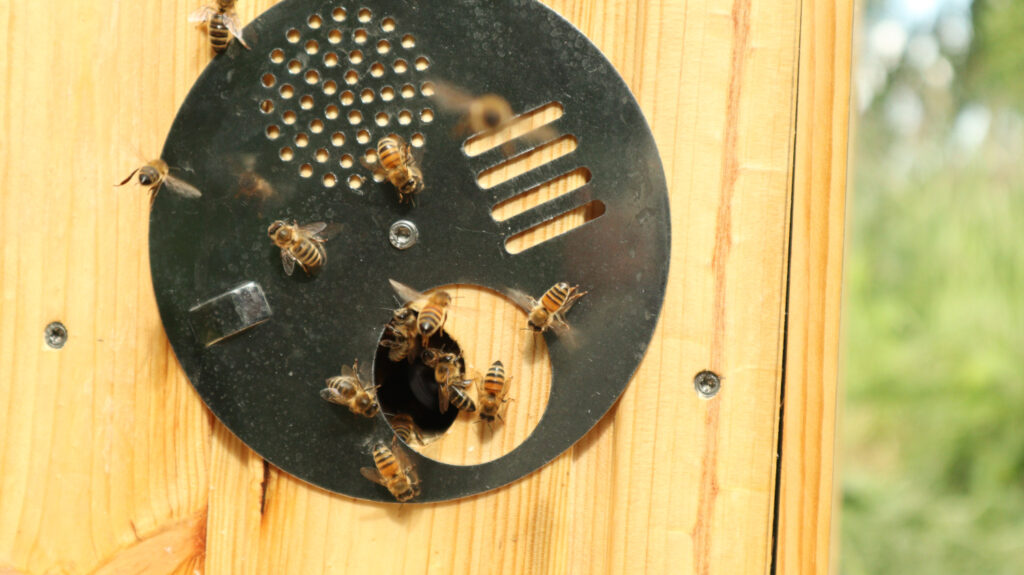
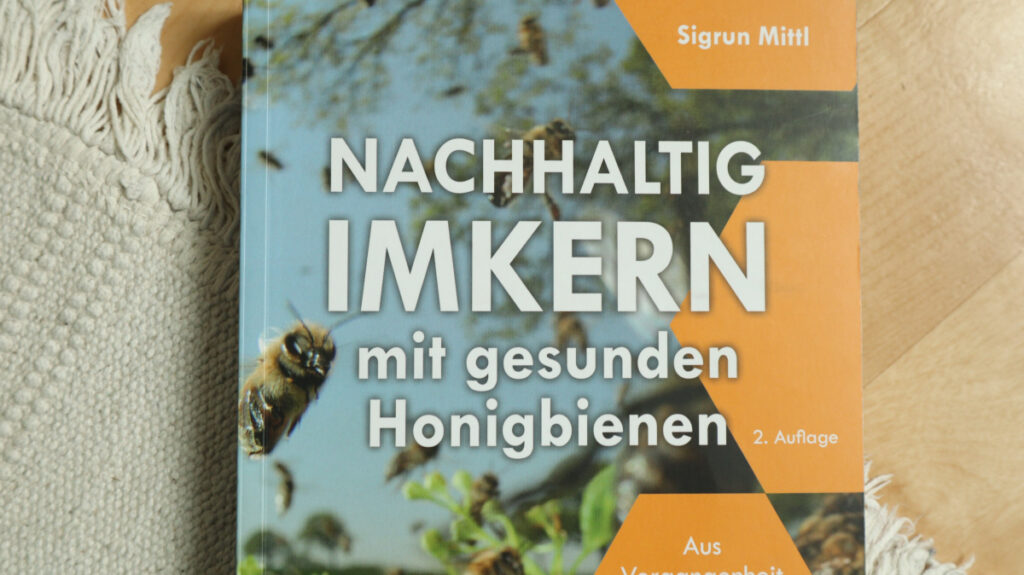
Sadly, this book has not been translated into english, but never the less I want to share it with you along with the insights, that I gained and a translation of the blurb:
Humans and the Western honeybee share a long history together: Even the earliest humans valued honey and wax and sought the company of this remarkable insect. Perhaps it is this long shared history that still nourishes the deep connection many people feel toward bees today. Yet humans have not treated the honeybee well: Today, after only a few decades of intensive beekeeping, the native honeybee is on the brink of extinction, and even our managed bee colonies are in distress. But there is hope, because sustainable and animal-friendly beekeeping is possible. Wild honeybees, which still survive in good health in our forests and landscapes, play a particularly important role in this. What can we learn from them and apply to our beekeeping practices?
This book compiles the most important scientific findings and explains how they can be implemented in practical beekeeping.
The book takes the reader on a journey through the history of the honeybee and how it and humans embarked on a shared path. Nowadays, however, the relationship between humans and honeybees has largely deteriorated, as humans no longer consider the natural behavior and needs of Apis mellifera, but instead force it into a way of life that serves human interests—often at the expense of the bee’s health.
Globalization and the associated exchange of colonies and honeybee subspecies on both continental and global levels have led to the loss of local adaptations and the spread of various diseases. This, in turn, has resulted in the use of chemical treatments and the emergence of chronically ill colonies that would not survive without chemical intervention.
A large part of the book deals with the various diseases, parasites, and pathogens, as well as the different ways in which humans have tried (and still try) to manage them, drawing on numerous scientific studies.
Even though working through the different diseases might seem a bit dry at first, extremely interesting patterns and causal relationships have emerged—ones that have repeatedly confirmed my belief: we must move away from chemical treatments and toward locally adapted animals (and plants).
I would reccomend this book to anyone who keeps honeybees or aspires do so.
My Key Takeaways:
- Hives should be bee-friendly
- Not too large (around 50 liters) and well insulated
- Inspections by the beekeeper should be minimized
- This causes stress and disturbs the microclimate inside the hive
- No brood removal or caging of the queen as a biotechnical method to control mite infestation
- These measures should only be used in exceptional cases instead of chemical treatments
- They cause stress in the colony and increase susceptibility to other diseases
- No feeding with sugar
- Sugar is not a suitable food for bees and reduces their life expectancy
- Use only natural comb
- No use of foundation sheets or exchange of combs between colonies, this can lead to a transmittion of diseases
- The production and usage of Propolis and a variety of nectar and pollen sources improve honeybee health
- Bee bread should not be removed
- Rubus pollen (e.g., from blackberries or raspberries) is of particularly high quality
- Propagation through swarming
- Vertical reproduction reduces disease, among other things by decreasing pathogen pressure, natural brood breaks, and the natural hygienic behavior of swarm clusters
- No row arrangement of hives
- A spacing of 20–30 meters is good, 70 meters is better, as this reduces the number of bees returning to a wrong hive and thus the transmission of diseases to 0%
- Wild-living honeybees should be regarded as a genetic treasure, not as disease carriers
- Surplus honey should be harvested after winter in May/June, not in late summer/autumn
- this is only possible when no chemicals are used
- Varroa resistance through natural selection and/or selective breeding is the only sensible path forward
I hope I was able to give you a small insight into the work of Sigrun Mittl, and that it has inspired you to consider a natural or nature-oriented approach to beekeeping.
Until next time,